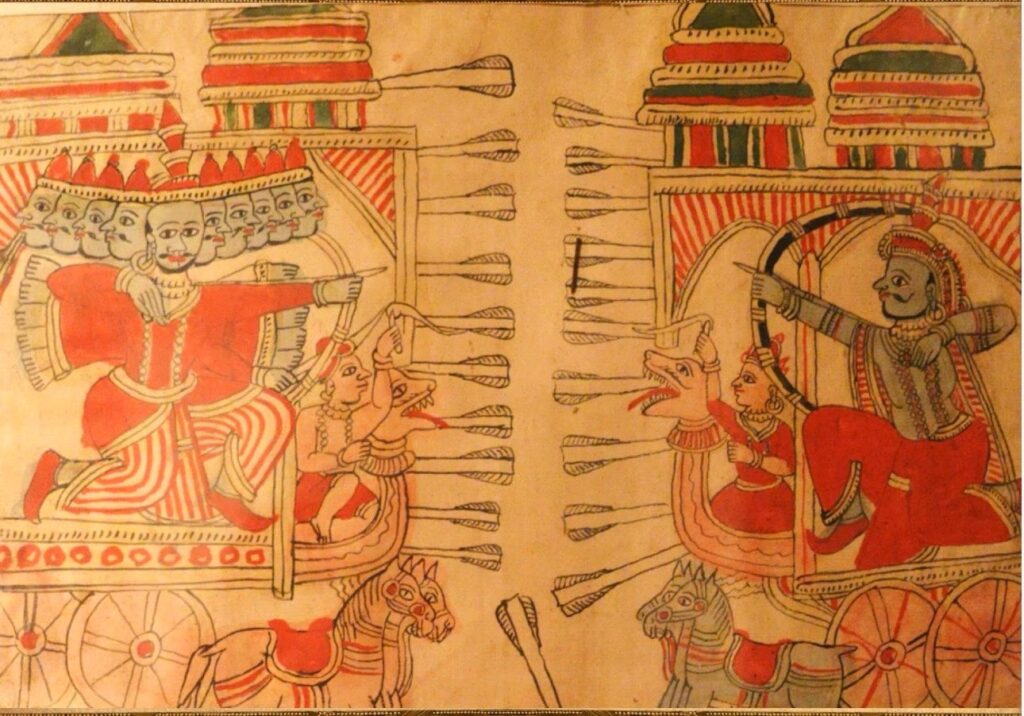

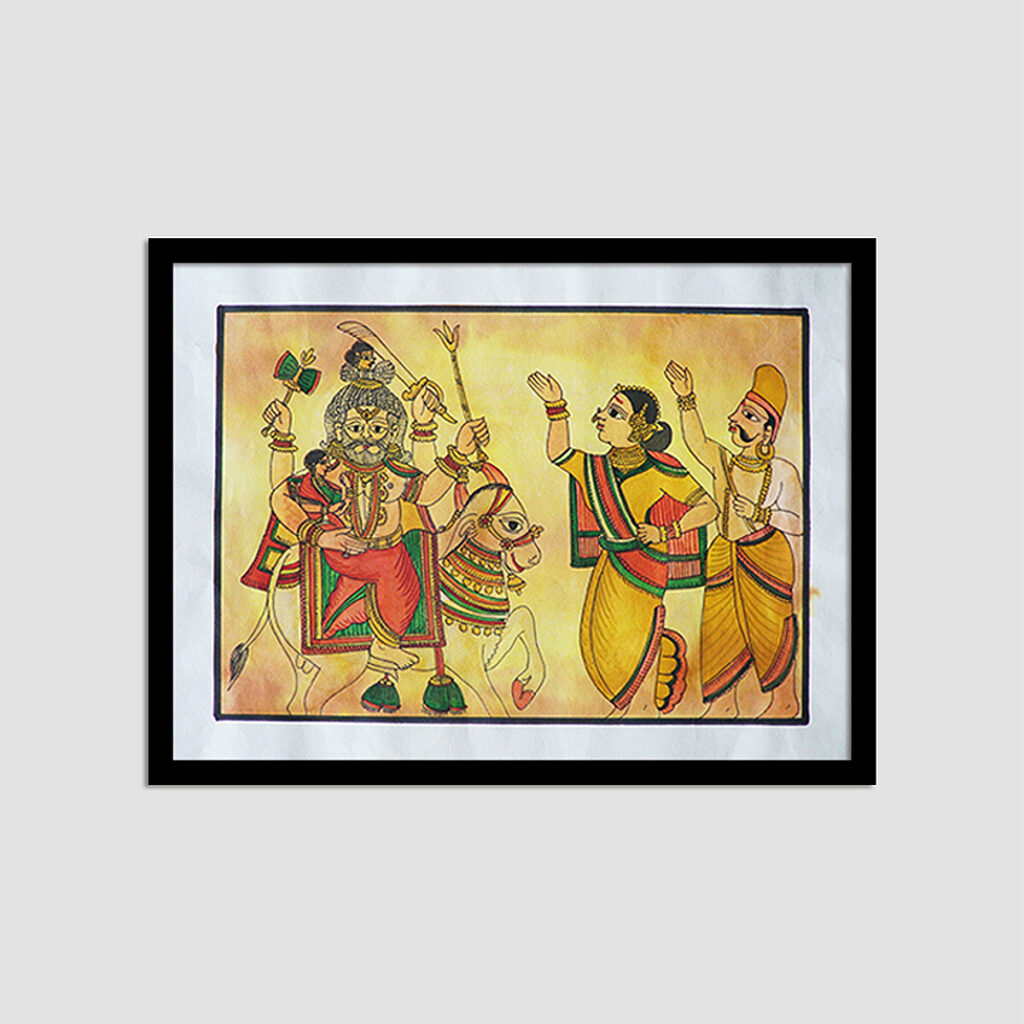
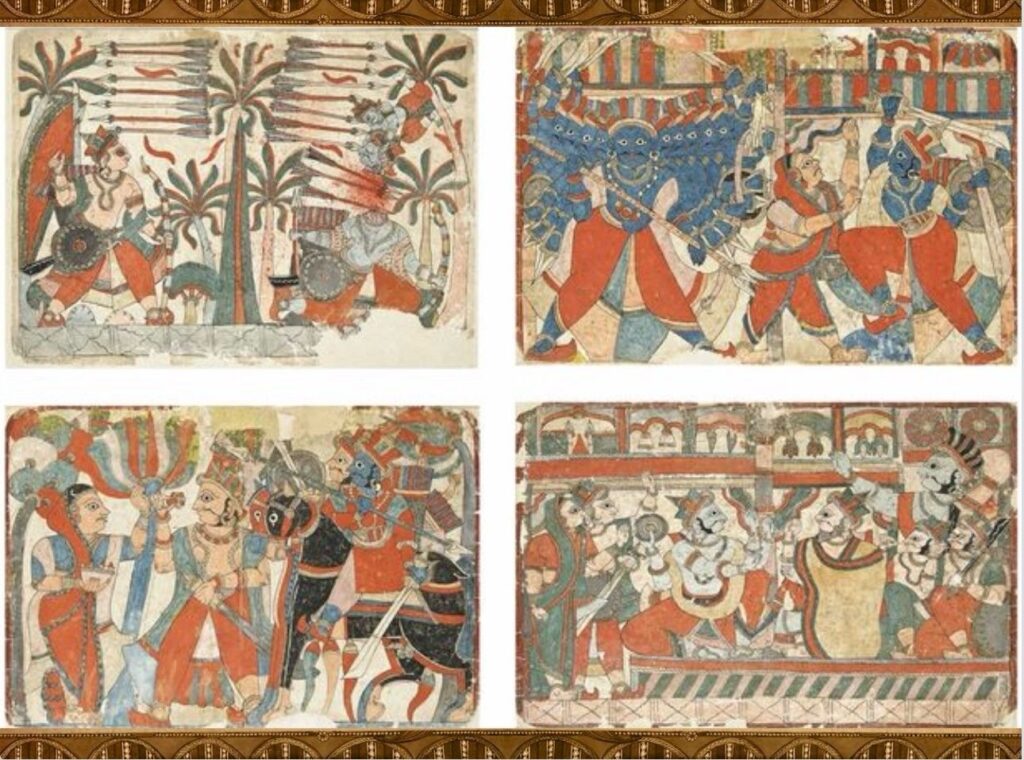
There is something strange about seeing a Chitrakathi painting hanging quietly on a wall.It is beautiful, of course. Strong colours, expressive figures, dramatic scenes. But it was never really meant to be looked at in silence.Chitrakathi belongs to a storytelling tradition in which paintings were shown one after another while a performer narrated the story, sang, changed voices and brought familiar episodes from the Ramayana, the Mahabharata and other narratives to life. In Pinguli, near Kudal in Maharashtra’s Sindhudurg district, the tradition has been practised by members of the Thakar community. The artists were painters, but they were also storytellers and performers. So a Chitrakathi painting was really one frame in a much larger experience.And that is what makes its uncertain future particularly troubling.
When the painting was only part of the story
Before television, cinema and the endless stream of images we carry around on our phones, stories travelled differently. A storyteller arrived. People gathered. A painted image was held up. Then another.The audience might already know how the story ended. That was not the point. They came for the telling. Traditional Chitrakathi sets could contain dozens of individual paintings connected to one narrative. These were kept together as bundles and revealed as the story progressed. Music, song and performance completed the experience.I find that idea quite wonderful: a painting that did not expect to exist independently of a human voice.Today, when we encounter an old Chitrakathi work in a collection or exhibition, we may still have the image. But unless the performance survives with it, we are seeing only part of what the work once was.
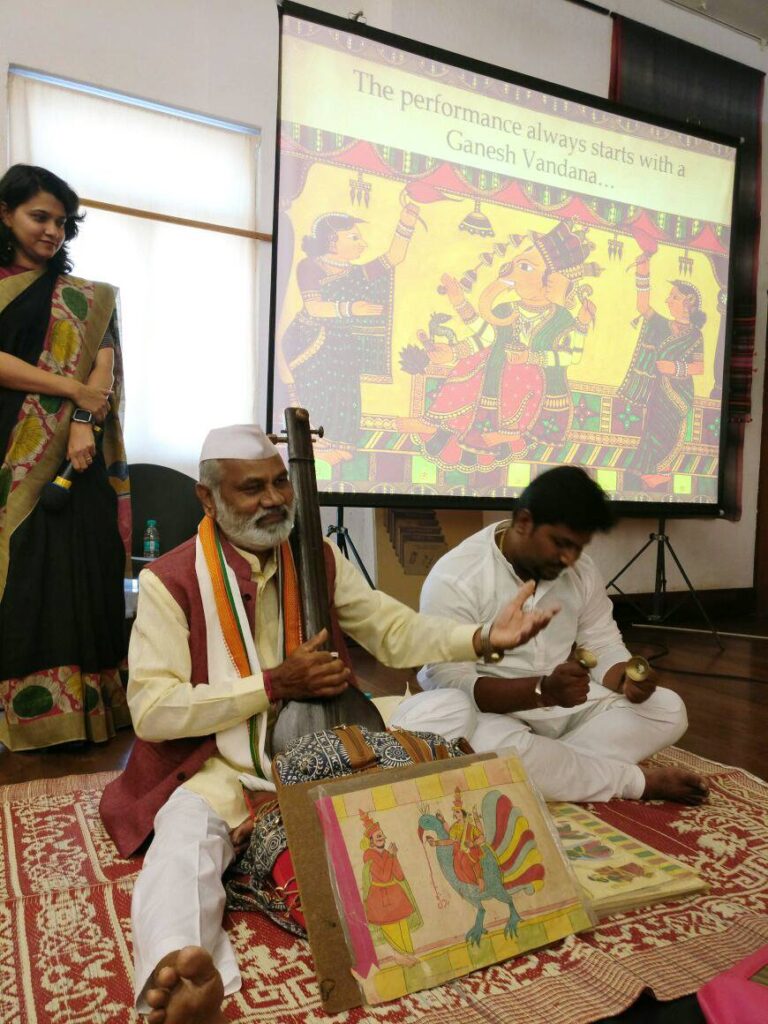
What happens when the audience disappears?
Very few families in Pinguli continue the tradition today.Some practitioners are exploring contemporary subjects and new ways of using the Chitrakathi visual language. Others continue to work more closely with traditional narratives and forms.I recently saw examples of both, and they stayed with me. My first instinct was to ask which approach was “right”. Should an art form like Chitrakathi be protected in its original form? Or does it need to change if it is to have a future?
But perhaps that is the wrong question. Traditions have never been completely still. They have responded to patrons, materials, audiences and the lives of the people practising them. What matters is not whether change happens, but how it happens, and who gets to decide. When an artist who has grown up within a tradition begins to experiment with it, that is very different from someone outside it simply borrowing its visual style.One is an evolution from within. The other can easily become decoration.That distinction matters.
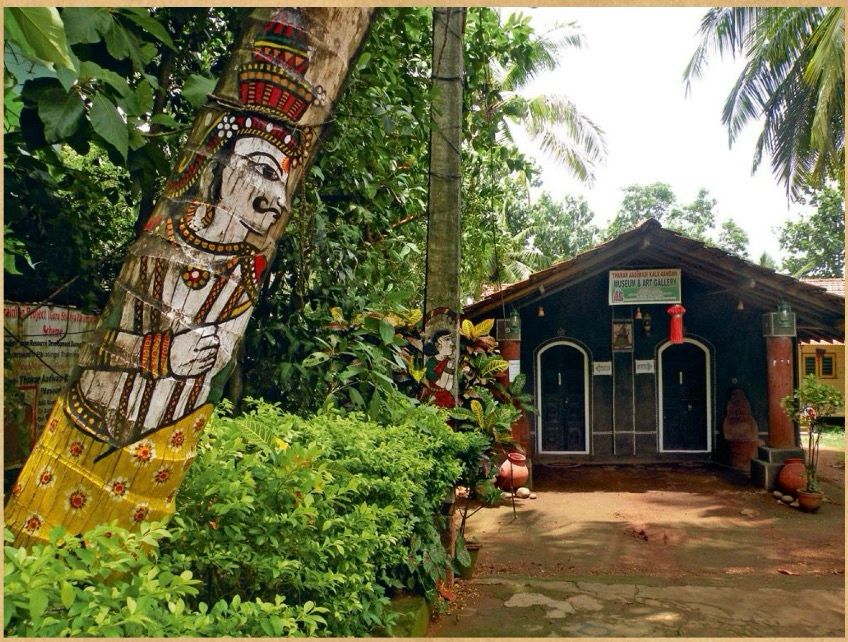
Preservation cannot mean asking people to struggle forever
There is another part of this conversation that is harder to romanticise, livelihood.We often say that younger generations are “losing interest” in traditional crafts. But I sometimes wonder whether we are asking the right question.If a young person has watched their parents struggle to find enough buyers for their work, why would we assume they will automatically choose the same path? Cultural inheritance is powerful. So is the need to build a stable life.We cannot expect an artisan’s child to continue a tradition simply because the rest of us would be sad to see it disappear.If we value an art form, that value has to become tangible.
There need to be buyers. Commissions. Platforms. Serious documentation. Opportunities to learn and teach. Collaborations that respect authorship. Museums that do more than preserve objects after a tradition has already weakened. And there needs to be room for the practitioners themselves to imagine where their work might go next.
Keeping the knowledge
This is something we come up against often at Baaya. When we bring a traditional art or craft into a contemporary interior, the easiest thing would be to take its most recognisable motif and repeat it on a new surface.But that is not really what interests us.The deeper challenge is to understand what makes the tradition itself distinctive. Is it a technique? A way of composing an image? A particular material knowledge? A story? A ritual context? A way of looking at nature?
And then, what can move, and what should not?There is no single answer. Every tradition asks something different of us.Chitrakathi perhaps makes the question particularly urgent because the art does not live only in the painted surface.It lives in sequence.In voice.In memory.In performance.In knowing which picture comes next.
You can preserve forty paintings in perfect condition and still lose the knowledge of how those paintings were once brought alive.
Who, then, is responsible?
Whenever an art form becomes endangered, we tend to look immediately towards the artisan.Will they continue it? Will their children learn it? Will they preserve the old style?
But the responsibility cannot sit with one family. It belongs to many of us. To designers who can create meaningful new contexts for the work. To museums and cultural institutions that can document performances as carefully as they collect objects. To governments that can support training and cultural livelihoods. To schools that can make regional traditions visible to children.And to buyers.
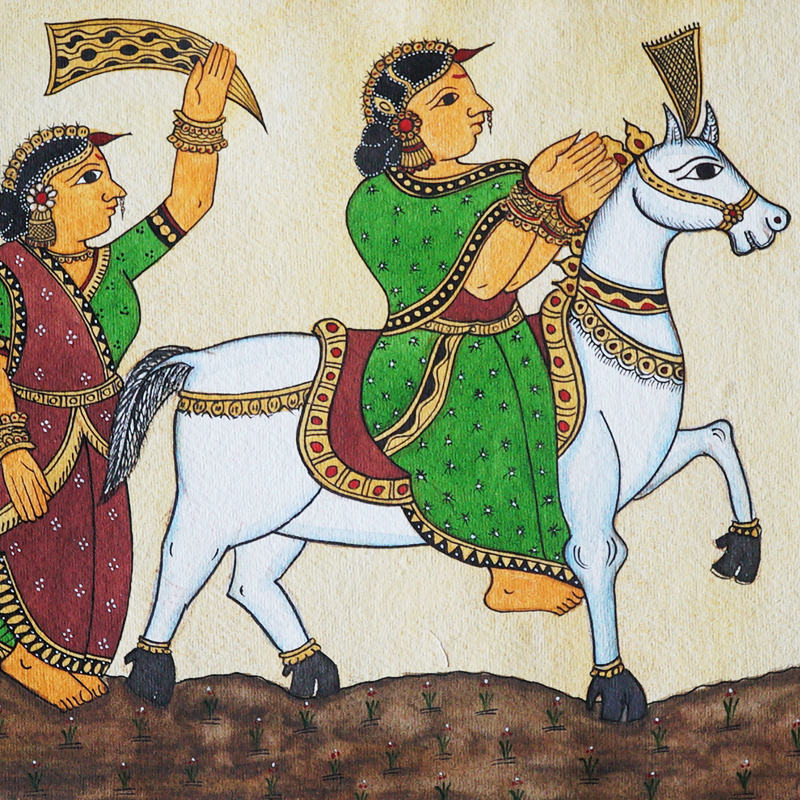
That last part may be the simplest and the most important. An art form needs appreciation, certainly. But appreciation that never becomes patronage can only do so much. I am sharing traditional Chitrakathi paintings alongside a contemporary interpretation because I think they deserve to be looked at together rather than placed on opposite sides of a debate.One tells us where the tradition has come from. The other asks where it might go.Perhaps survival lies somewhere in that conversation.
Because Chitrakathi was always an exchange between storyteller and audience. And even now, the future of the tradition may depend on whether there is someone on the other side willing to look, listen, and stay for the story.