

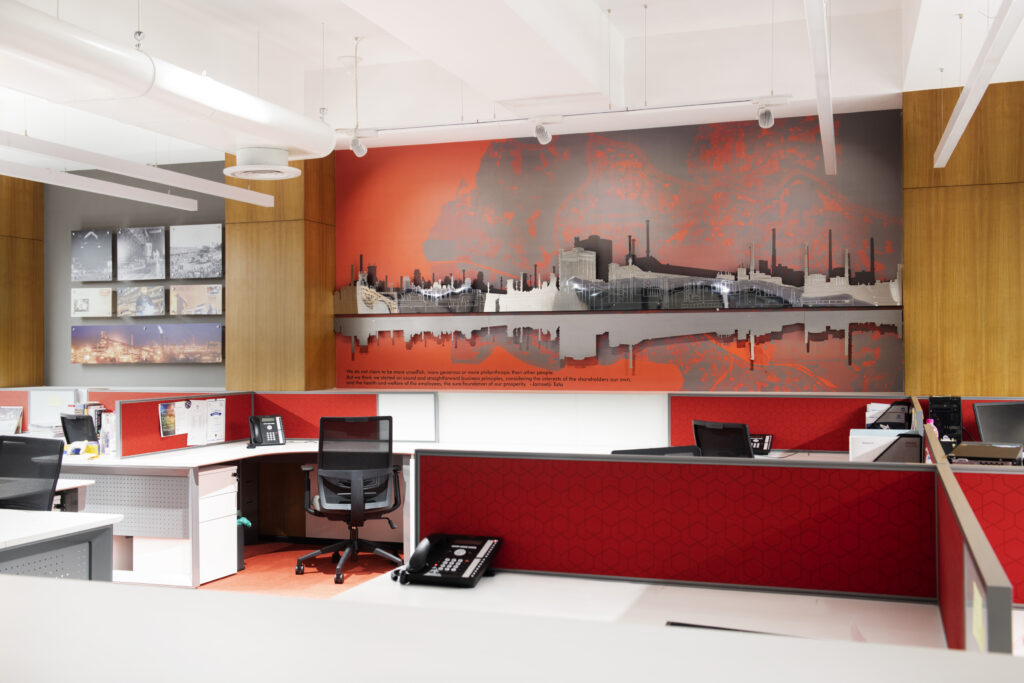
Most commercial spaces check boxes: functional layouts, neutral palettes, replaceable fixtures. They work. Tenants move in. The space serves its purpose.
Then there are commercial spaces people talk about. Spaces that become addresses worth mentioning. Where employees want to work, clients want to visit, and companies compete to lease.
The difference? Bespoke design that creates identity instead of just square footage.
The Real Cost of Generic Design
Walk through any business district. Office lobbies blur together marble floors, glass partitions, generic art prints. These spaces cost money to build, but they don’t build value.
Generic design actually costs you:
Tenant turnover. When spaces feel interchangeable, tenants don’t develop attachment. They leave for marginally better rates elsewhere.
Lower rental premiums. Generic spaces compete on price alone. You can’t charge premium rates for average design.
Brand dilution. For owner-occupied spaces, generic design sends a message: we’re not distinct enough to invest in our environment.
Obsolescence. Trends age quickly. Generic design has no timeless quality to fall back on it just feels old.
Bespoke design solves all four problems.
Three Ways Bespoke Design Creates Value
1. Asset Differentiation
In markets with abundant supply, why should a tenant choose your building?
Custom spatial design creates tangible differentiators:
- Signature lobbies that become the building’s identity
- Distinctive common areas people actually want to use
- Architecture that tells a story and transcends “just another office building”
We’ve seen this repeatedly: buildings with thoughtfully designed bespoke elements command 15-30% higher rents than comparable generic spaces in the same area.
2. Tenant Retention
Replacing a tenant costs 3-6 months of rent minimum. Bespoke design reduces turnover:
Environmental attachment. People develop connection to spaces that feel unique. An office in a building with distinctive craft installations feels different than an office that could be anywhere.
Recruitment asset. Companies use their office aesthetic for recruitment. A bespoke installation becomes a recruiting tool. Tenants don’t want to leave spaces that help them attract talent.
Reduced relocation friction. If your building offers something they can’t find elsewhere, the barrier to leaving increases significantly.
3. Long-Term Relevance
Generic design follows trends. Trends expire. The industrial-chic aesthetic from 2015-2018? Already dated.
Craft-based bespoke design ages differently:
Materials improve with time. Natural materials wood, metal, stone, textiles develop patina. A handwoven textile wall that’s 10 years old looks richer, not worn out.
Timelessness through authenticity. Pieces rooted in craft traditions don’t feel dated because they reference centuries of practice, reinterpreted.
Adaptability. Well-designed installations can be refreshed or recontextualized without complete replacement.
We design installations with 15-20 year lifespans, not 3-5 year cycles. The ROI math changes dramatically.
The Numbers: Bespoke vs. Generic
Let’s look at a 50,000 sq ft commercial building over 10 years:
Generic Design:
- Initial + refreshes: ₹1.2 crore
- Vacancy rate: 12%
- Rental premium: 0%
Bespoke Design:
- Initial + minimal updates: ₹1.25 crore
- Vacancy rate: 6% (better retention)
- Rental premium: 18%
Design investment difference? ₹5 lakh over a decade.
Revenue difference from reduced vacancy and higher rents? ₹4.8 crore+.
This doesn’t account for faster initial lease-up, lower broker fees, or higher eventual sale price.
A Corporate Headquarters Example
Consider the typical corporate headquarters challenge: create an environment that reflects brand identity, supports culture, and remains relevant as the company evolves.
We worked with a financial services firm that wanted their Mumbai headquarters to signal stability, heritage, and forward-thinking simultaneously.
Our approach:
- Researched the city’s textile and metal craft traditions
- Designed a central atrium installation using traditional Bidri metalwork techniques at architectural scale
- Created breakout spaces with custom lighting inspired by regional weaving patterns
The result:
Higher employee satisfaction. Client meetings now begin in the lobby to showcase the environment. Recruitment materials lead with office imagery.
Five years later, the design still feels current because it wasn’t designed to be trendy. It was designed to be meaningful.
What “Bespoke” Actually Means
Not all custom work adds value. True bespoke design means:
- Site-specific, designed for the exact space and context
- Quality materials with longevity and authenticity
- Coherent narrative aligned with building identity
- Integrated with architecture, not applied afterward
- Craft processes that ensure quality
Questions to Ask Before Investing
Before committing to bespoke design, clarify:
1. What’s the building’s identity? Not “modern office building.” Deeper. Tech-forward workspace? Heritage building reimagined? Wellness-focused environment?
2. Who are you trying to attract? Creative agencies value different signals than law firms. Bespoke design should speak to your target tenant’s values.
3. What’s the 10-year vision? If you’re flipping the property in 3 years, bespoke may not be the move. If you’re holding long-term, the investment compounds.
Sustainability and Value
ESG criteria increasingly influence commercial real estate valuations. Bespoke craft-based design aligns with sustainability goals:
Material provenance. Natural, locally sourced materials have lower embodied carbon and support regional economies.
Artisan livelihoods. Commissioning bespoke work sustains craft communities measurable social impact.
Longevity over replacement. A 20-year installation avoids the waste cycle of replacing trendy decor every 3-5 years.
Forward-thinking developers recognize that sustainability credentials increase both tenant appeal and asset value.
Implementation: Start Early
The biggest mistake: treating bespoke installations as an afterthought after construction is complete.
The right sequence:
During Schematic Design – Bring in spatial design consultants, identify high-impact zones, budget for custom design
During Design Development – Finalize concepts, coordinate with MEP for lighting/structural support
During Construction – Begin fabrication, coordinate installation sequencing
Post-Construction – Install bespoke elements, fine-tune placement
When integrated early, bespoke design becomes part of the building’s DNA. When added later, it feels decorative.
The Decision Point
Bespoke design isn’t for everyone. It requires:
- Long-term thinking (3+ year hold minimum)
- Budget beyond minimum viable product
- Comfort with distinctiveness over safe choices
If you’re building with a commodity mindset get it done fast, get it leased, move on generic design is more efficient.
But if you’re building assets meant to last, attract premium tenants, and command top-of-market rents, bespoke design isn’t an expense.
It’s the investment that makes everything else worth more.
Exploring bespoke design for your commercial property? Visit our Experience Centre to see how craft-led spatial design creates lasting value, or start a conversation about your project.