

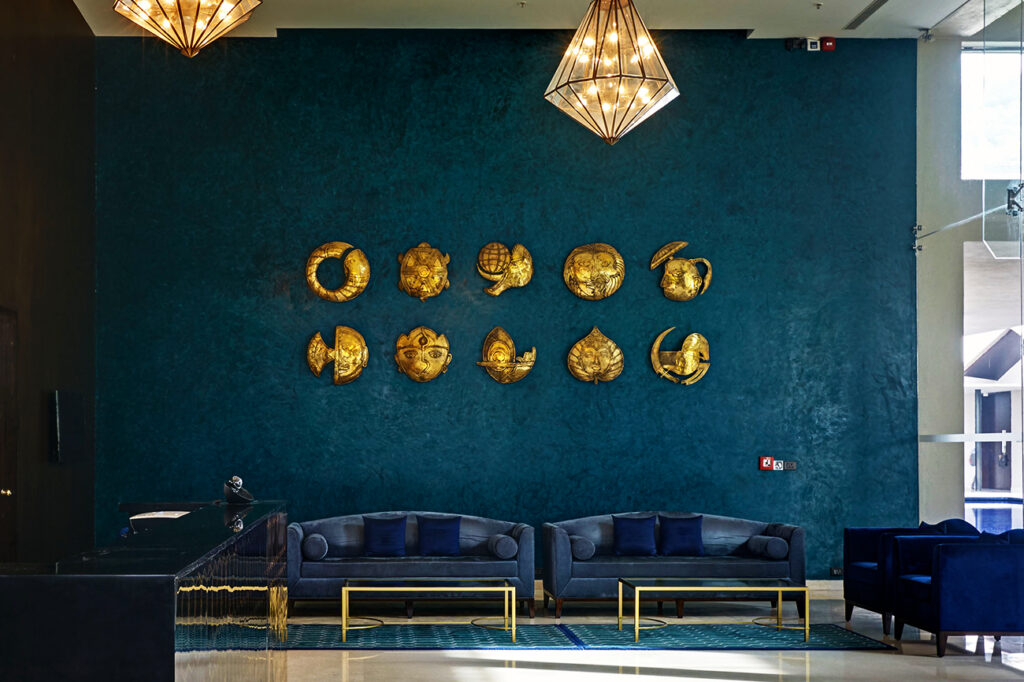
How Statement Art Panels Transform High-Impact Spaces
In hospitality and commercial interiors, large-scale art panels are no longer treated as finishing touches. They are integral to how a space is experienced, remembered, and understood. From hotel lobbies and corporate headquarters to airports and public lounges, thoughtfully designed wall art shapes first impressions and anchors the emotional journey of a space.
Unlike smaller decorative elements, large-format artworks operate at an architectural scale. They interact with volume, light, and movement, often becoming the visual language through which a brand or place expresses itself.
Why Large-Scale Art Panels Matter in Commercial Spaces
In expansive interiors, walls carry immense visual responsibility. Large-scale handcrafted panels act as architectural anchors, helping spaces feel intentional rather than overwhelming. They establish focal points, guide visual flow, and bring warmth to environments that can otherwise feel impersonal.
This approach is especially important in hospitality, where guests may spend only moments passing through a lobby or corridor, yet still form lasting impressions. In projects such as Hyatt Regency, Dehradun, bespoke artworks were designed as part of the arrival experience itself, using materiality and regional narratives to subtly ground the space in its context rather than relying on overt thematic décor.
In commercial settings, art also plays a quieter but equally important role. At Tata Bombay House, Mumbai, custom art installations were integrated to reflect legacy and authority, adding depth to formal interiors without disrupting their restrained aesthetic.
Designing Art That Responds to Architecture
Choosing art for commercial scale begins with understanding the architecture it inhabits. A double-height lobby demands a very different visual rhythm from a long corridor or a multi-use lounge. Vertical panels can emphasise height and grandeur, while elongated compositions help carry movement across wide spaces.
This sensitivity to scale is evident in projects like Marasa Sarovar, Tirupati, where large wall installations were conceived as narrative sequences rather than isolated pieces. Convex brass elements and hand-painted Kalamkari murals unfold across public spaces, creating continuity while allowing each area to retain its own mood.
In transit environments such as Lucknow Airport Terminal 3, modular and segmented installations help manage vast wall surfaces, allowing art to guide the traveler’s journey without overwhelming the architecture.
Materiality, Durability, and Craft
Material choice becomes critical in hospitality and commercial interiors, where artworks must perform under varied lighting conditions and constant foot traffic. Handcrafted surfaces like metal, wood, mixed media, enamel, bring tactile richness while ageing gracefully over time.
In spaces like Forefathers Restaurant, Hyderabad, material-led artworks become part of the dining atmosphere itself, adding texture and depth without competing with the experience.
This balance between durability and artistry is central to Bespoke by Baaya, where each installation is developed in close collaboration with architects and interior designers to ensure that material, scale, and narrative align seamlessly.
Bespoke Art vs Ready-to-Place Collections
Large bespoke commercial projects often require a mix of approaches. Fully custom installations allow for precise responses to site, story, and architecture, making them ideal for flagship spaces, arrival zones, and brand-defining walls.
At the same time, projects with tighter timelines or multiple locations benefit from curated works that already carry strong narrative and scale. The Baaya Signature collection offers large murals and panels that reinterpret Indian craft traditions in contemporary forms, making them well-suited for hospitality lounges, bespoke corporate interiors, and public spaces.
These can be further layered with accent elements from Baaya Selection, allowing designers to extend a cohesive visual language across corridors, meeting spaces, and transitional areas.
Where Large-Scale Art Panels Create the Most Impact
Large-format art is most effective in spaces where people pause, arrive, or transition. Reception back walls, boardrooms, elevator lobbies, dining zones, and wellness areas all benefit from art that anchors the experience and adds emotional depth.
In each of these settings, the goal is context, between space and story, function and feeling.
Art as a Long-Term Investment in Experience
Large-scale art panels do more than fill walls. They shape atmosphere, define movement, and communicate identity in ways that architecture alone cannot. In bespoke hospitality and commercial design, where every square foot contributes to perception, thoughtfully crafted art becomes an investment in memory.
When art is scaled correctly, rooted in craft, and aligned with context, it doesn’t announce itself loudly. It settles into the space, becoming part of how the place is experienced, remembered, and returned to.For projects that demand both impact and nuance, Bespoke by Baaya, Baaya Signature, and Baaya Selection offer distinct yet complementary approaches to integrating art into high-impact spaces.