

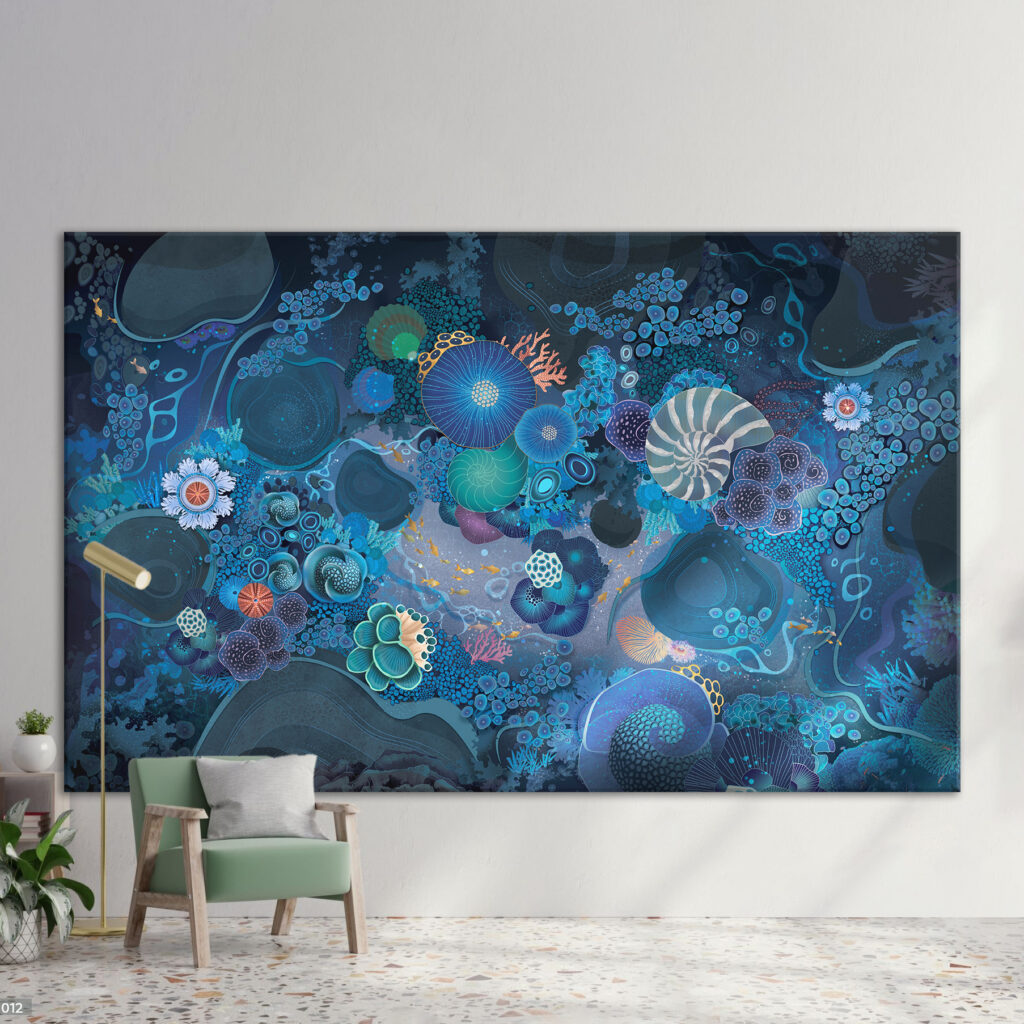
Architecture and art used to have clear boundaries. Architects designed the shell. Interior designers filled it. Artists created discrete objects to hang on walls.
Those boundaries are dissolving.
The most compelling spaces being built today don’t distinguish between architecture, interior design, and art, they integrate all three from inception. Bespoke installations aren’t applied to finished buildings; they’re woven into the architectural concept itself.
This isn’t a trend. It’s a fundamental shift in how we think about spatial design.
What’s Driving the Change
Three forces are reshaping the relationship between architecture and bespoke art:
1. The Experience Economy
Spaces compete on experience, not just function. A hotel lobby isn’t just check-in it’s an Instagram moment, a reason to choose one property over another. A corporate office isn’t just square footage it’s a talent recruitment tool.
When experience drives value, art becomes infrastructure part of the foundation, not decoration.
2. Digital Fabrication Meets Traditional Craft
CNC routers, laser cutters, parametric design software, and 3D printing have opened new possibilities. But instead of replacing craft, these tools are amplifying it.
We’re seeing hybrid making, digital design combined with hand-finishing, algorithmic pattern generation interpreted through traditional weaving, parametric forms realized in hand-forged metal.
The future isn’t craft OR technology. It’s craft AND technology, in productive tension.
3. Demand for Authenticity
As spaces become more standardized globally, people crave environments rooted in something real. Bespoke art offers provenance, who made it, where materials came from, what techniques were used, what cultural lineage it represents.
That authenticity can’t be mass-produced.
Seven Trends Shaping the Future of Bespoke Art in Architecture & Interior Design
1. Architecture-Integrated Installations
The future is installations designed with architecture, not added afterward.
Structural art that serves functions: screens controlling light and privacy, ceiling elements improving acoustics, facades managing climate while creating visual identity.
Embedded narrative where architectural details reference craft traditions: staircases using traditional joinery, ceiling patterns derived from textile motifs.
Spatial defining elements that create zones without walls: suspended textiles separating spaces while maintaining light, metalwork screens guiding movement while maintaining visual connection.
2. Digital-Craft Fusion
Parametric design + traditional weaving. Generate complex geometric patterns through code, then translate into weaving instructions. Pattern designed digitally, executed entirely by hand.
Computational pattern + metal craft. Algorithmic patterns responding to spatial conditions, density gradients, light modulation, executed by master metalworkers through traditional techniques.
AI-assisted exploration. Generative tools exploring possibility spaces quickly, then hand-off to artisans for execution and refinement.
We’re entering an era where technical sophistication and handcraft aren’t opposites, they’re complementary.
3. Climate-Responsive Installations
Dynamic light modulation. Facade installations that shift throughout the day—metal screens creating different shadow patterns, textiles diffusing harsh light while maintaining views.
Acoustic installations. Custom textiles as architectural solutions, designed for specific reverberation challenges while maintaining visual coherence.
Thermal comfort through material. Natural materials moderating temperature and humidity. A handwoven wall isn’t just beautiful, it affects how the space feels temperature-wise.
4. Hyper-Local Material Sourcing
Within-region sourcing (200-500km radius) reduces carbon footprint and connects installations to geographic context. Kerala projects use coconut fiber, bamboo, clay pigments. Rajasthan projects use sandstone, cotton, brass.
Waste-stream materials. Reclaimed wood from decommissioned furniture, metal from dismantled infrastructure, textiles from surplus production. Materials with history, addressing waste.
Artisan-led innovation. Rediscovering traditional materials that fell out of use—natural dyes, regional fibers, locally quarried stone.
5. Modular and Reconfigurable Systems
Permanence is being reconsidered. The most interesting work includes systems designed for adaptation.
Textile systems where panels swap or rearrange. Metalwork with interchangeable modules. Lighting where fixtures remain but textural elements rotate.
This allows spaces to evolve, companies grow, programs refresh, without complete replacement.
6. Storytelling Through Technology
The installation is physical, but story extends digitally:
AR-enhanced context. View a handwoven installation through your phone and see overlays showing the weaving process, artisan’s hands working, source village.
QR-linked artisan stories. Discreet codes linking to films about making process, craftspeople interviews, technique documentation.
Digital twins. 3D scans ensuring preservation and allowing techniques to be studied and taught.
7. Post-Colonial Craft Narratives
A necessary reckoning around how non-Western craft traditions have been represented and commodified.
Moving beyond “ethnic decor.” The old model: Western designers “discover” exotic crafts, strip context, apply as decoration. The new model: Deep collaboration, fair compensation, credit to specific makers, cultural context respected.
Decolonizing design processes. Artisans as collaborators, not suppliers. Revenue-sharing models. Documentation naming individuals. Authentic representation without appropriation.
At Baaya, this has always been central. We don’t extract craft, we collaborate with craftspeople.
What This Means for Clients
If you’re planning a space:
1. Budget Allocation Should Shift
Don’t think: Architecture + interior + art (afterthought).
Think: Integrated spatial design where art is core infrastructure – 15-20% of construction budget, not 2-3%.
2. Timeline Expectations Should Adjust
Bespoke installations using craft techniques take time – 8-16 weeks for fabrication. Build this into project schedules from the start.
3. Collaboration Models Should Evolve
Bring spatial design consultants in during schematic design, not after construction documents. Best integration happens when installations inform architecture.
4. Value Metrics Should Expand
Beyond “does it look good,” consider:
- Does it support artisan livelihoods?
- Does it tell an authentic story about place?
- Does it improve with age or deteriorate?
- Does it contribute to cultural preservation?
- Does it enhance experience functionally?
These questions separate meaningful bespoke design from expensive decoration.
The Next Decade: Predictions
By 2035, we expect:
- Architectural-scale craft installations as standard in premium developments
- Hybrid making processes normalized (digital + traditional)
- Material provenance as critical as aesthetics
- Adaptive installations over static ones
- Artisan knowledge recognized as design expertise craftspeople as co-creators
- Climate-responsive becoming mandatory
- Post-colonial craft narratives as baseline expectations
The Work That Matters
In all of this, one thing remains constant: the best bespoke art is still made by hand, with care, by people who’ve mastered techniques through years of practice.
Technology changes possibilities. Market forces change demand. Cultural awareness changes ethics.
But excellence in craft understanding materials intimately, executing with precision, bringing intention to every detail that doesn’t change.
The future of bespoke art in architecture isn’t about replacing craft. It’s about expanding what craft can do, who it serves, and how it integrates into the spaces we build.
That’s the work we’re committed to at Baaya: pushing boundaries while preserving the integrity of traditional making. Innovation through craft. Contemporary expression rooted in centuries of knowledge.
The spaces being built today will exist for 30, 50, 100 years. The installations within them should be worthy of that longevity not just visually, but ethically, materially, and culturally.
That’s the standard the future demands.
Want spatial design studio that anticipates where the field is going? Visit our Experience Centre to see how we’re integrating craft, technology, and cultural narrative, or start a conversation about your project.