

Here’s a question we get often, usually from architects or hotel owners a few months into a project that isn’t quite landing the way they hoped:
“We have an interior designer. We have an architect. Why isn’t the space feeling right?”
The answer, most of the time, is that nobody was given the job of thinking about how the space would feel. Everyone was thinking about how it would look.
That’s the gap a spatial design consultant fills. And it’s a bigger gap than most people realise, until they’re staring at a beautifully finished hotel lobby that feels strangely empty, or a corporate office that photographs well but demoralises everyone who works in it.
First, What Spatial Design Actually Is
Spatial design is the discipline of designing how people experience a space, not just how it looks, but how it sounds, how it flows, where the eye travels, what it feels like to move through it at different times of day.
An architect resolves structure and form. An interior designer selects materials, finishes, furniture. A spatial design consultant sits above both of those conversations and asks a more fundamental question: what is this space supposed to make people feel, and is every decision serving that?
It’s the difference between a hotel lobby that’s ‘nicely done’ and one that stops guests in their tracks. Both cost money. Only one gets photographed 400 times a week.
The Taj Mahal Palace Mumbai has been commissioning site-specific art since 1967. Their collection now runs to over 4,000 works. That’s not coincidence, it’s a spatial design philosophy built over decades.
What the Work Actually Looks Like
A spatial design consultant typically comes in at the brief stage, before the architect has finalized the floor plan, before the interior designer has started their mood boards. That timing matters.
Because the decisions that shape how a space feels aren’t made at the end. They’re made when the ceiling height gets locked in. When the flow from entrance to dining to terrace gets decided. When someone determines where natural light will fall and at what time of day.
Change those things later and you’re in for expensive retrofitting. Get them right early and the rest of the project builds on a solid experiential foundation.
1. The Spatial Narrative
Before anything else: what story does this space tell? For a boutique hotel in Goa, that might be rooted in the Portuguese-Indian layering of the location. For a tech company’s Bengaluru headquarters, it might be about making the office feel less corporate and more like a place people choose to be.
This sounds abstract. It isn’t. The narrative becomes the filter for every decision, the art brief, the material choices, the lighting design, the scale of the reception desk. Without it, projects end up as collections of individually nice things that don’t add up to anything.
2. Flow and Wayfinding
How do people move through your space? Where do they hesitate? Where do they get lost?
Bad wayfinding is one of the most expensive problems in hospitality. It costs in staff time, in guest frustration, in TripAdvisor reviews that say ‘confusing layout.’ A spatial consultant maps movement patterns before a single wall goes up.
3. Art as Architecture
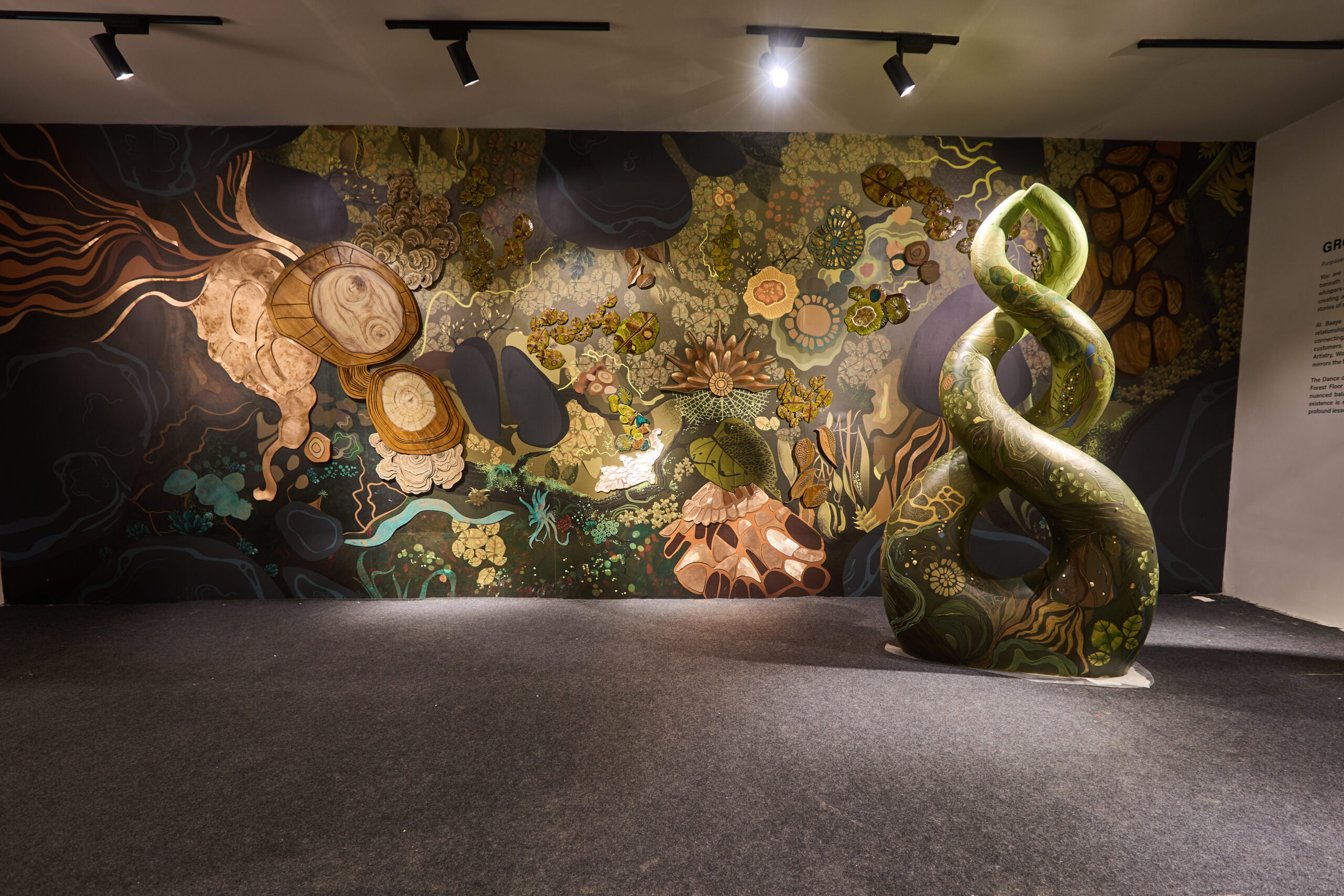
This is where Baayadesign’s work connects directly to spatial design. A large-scale art commissioned artwork isn’t decoration, it’s a structural element of the space. It creates a focal point, anchors a zone, gives visitors something to orient around.
The ITC Maurya in Delhi has 18 hand-painted glass panels by MF Husain in the main lobby. Nobody who walks through that lobby forgets it. That’s not an accident, it’s a spatial strategy.
4. Material and Sensory Consistency
Spaces feel incoherent when materials contradict each other. A hand-plastered wall next to cheap laminate. Handcrafted furniture under fluorescent light. A spatial design consultant looks at the whole sensory picture, and catches those contradictions before they’re irreversible.
Who Actually Needs a Spatial Design Consultant
Not every project does. If you’re refurbishing a small café, probably not. If you’re doing a standard office fit-out on a fixed budget, maybe not.
But if any of the following are true, it’s worth a conversation:
You’re developing a hotel, resort, or F&B space in a competitive market and your differentiation isn’t clear.
You’re an architect or interior designer on a complex hospitality or corporate project, and you sense the brief is missing an experiential layer.
You’re a brand, hospitality, retail, luxury, opening a flagship space and you know the environment needs to carry the brand, not just house it.
You’re an NRI client investing in a premium property in India and you want it to feel considered, not like it was assembled from a catalogue.
The Real Cost of Skipping It
We’ve walked into spaces that cost 15 crore to build and feel like they cost 3. Not because the materials were bad. Because nobody was holding the experiential brief.
The money went in. The feeling didn’t come out. And by the time anyone noticed, the project was done.
That’s what a spatial design consultant prevents. It’s not an add-on. It’s how you protect the investment.
Working on a hospitality, corporate, or residential project and wondering whether the brief is complete? Talk to the Baayadesign team. info@baayadesign.com