

Here’s the uncomfortable truth: attention is cheap, but engagement is rare.
Brands today are everywhere, on phones, feeds, inboxes, billboards. And yet, very little of it sticks. In response, forward-thinking brands are turning to something surprisingly old-school, deeply human, and impossible to scroll past i.e physical space.
Spatial design studio has quietly evolved from a backdrop into a strategy. Not just because it looks good, but because it works.
Space Is the Only Medium You Can’t Multitask Through
You can skim a website. You can half-listen to a brand film. You can scroll past a campaign in seconds.
But you cannot rush through a space without your body noticing. Space asks for presence. It demands scale, movement, orientation. And when designed well, it forces people to slow down, by sheer curiosity. This is precisely why brands are investing in spatial design.
From “Designed Spaces” to Designed Experiences
The role of physical environments has changed. Spaces are no longer expected to simply house activity, they’re expected to shape it.
Today, a brand space must:
- Communicate values before signage does
- Build emotional context before interaction
- Offer depth, not just polish
This is where spatial design consultants becomes less about interiors, and more about choreography.
At Baaya Design, we often approach projects as sequences rather than objects –
- What do you encounter first?
- What reveals itself slowly?
- Where does the eye pause?
- Where does the body linger?
- What story are you trying to tell?
The answers matter more than the finish.
Art-Led Spaces tell a story
Generic interiors say very little. Art-led spaces say one clear thing, someone thought deeply about this.
When brands invest in bespoke artworks, murals, and installations, they’re not just commissioning visual interest, they’re signalling intent, authorship, and cultural position.
Take Baaya Design’s 130-ft textile mural at Lucknow International Airport. It doesn’t announce itself loudly, nor does it rely on literal storytelling. Instead, it unfolds as a layered reading of Uttar Pradesh, through material shifts, textile traditions, and abstracted landscapes.
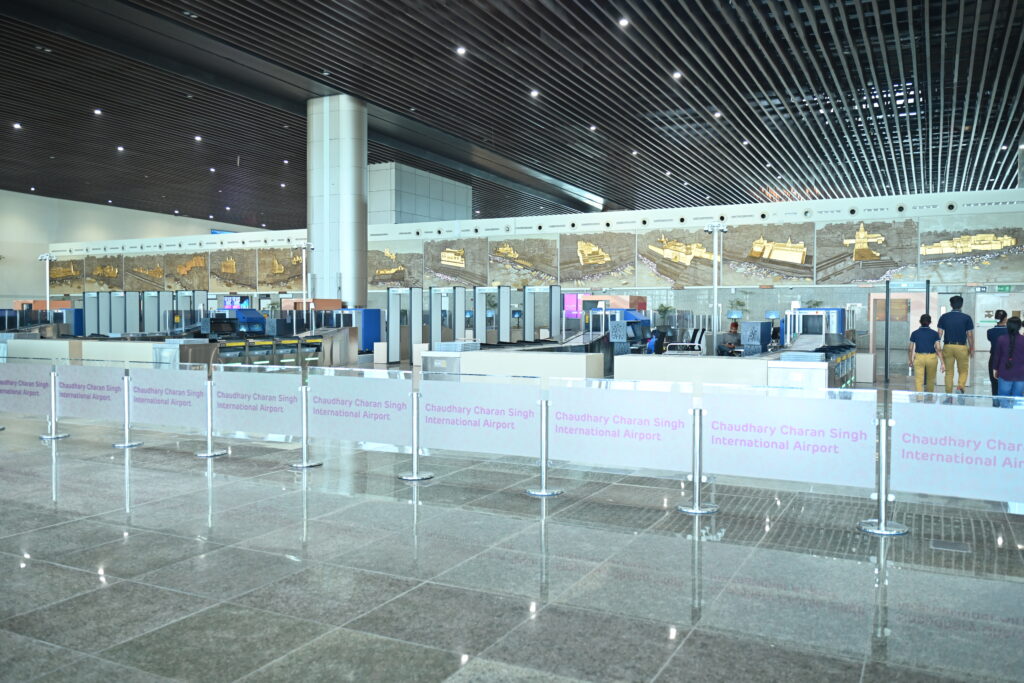
Most travellers won’t stop to decode every craft technique. But they feel grounded, oriented, and connected. And that feeling becomes part of the brand memory of the place. And THAT is design doing cognitive work.
Why Craft Matters More Than Ever
In a world increasingly shaped by automation and sameness, craft has become a differentiator, not just for nostalgia, but for credibility.
Craft introduces:
- Irregularity (which the brain finds interesting)
- Evidence of time and labour
- A sense of care and human presence
Wall murals like ‘Grounded’, showcased by Baaya at India Design, lean into this deliberately. Copper enamel, wood carving, and layered materials aren’t chosen for ornamentation, but for what they communicate: patience, depth, and a slower intelligence.
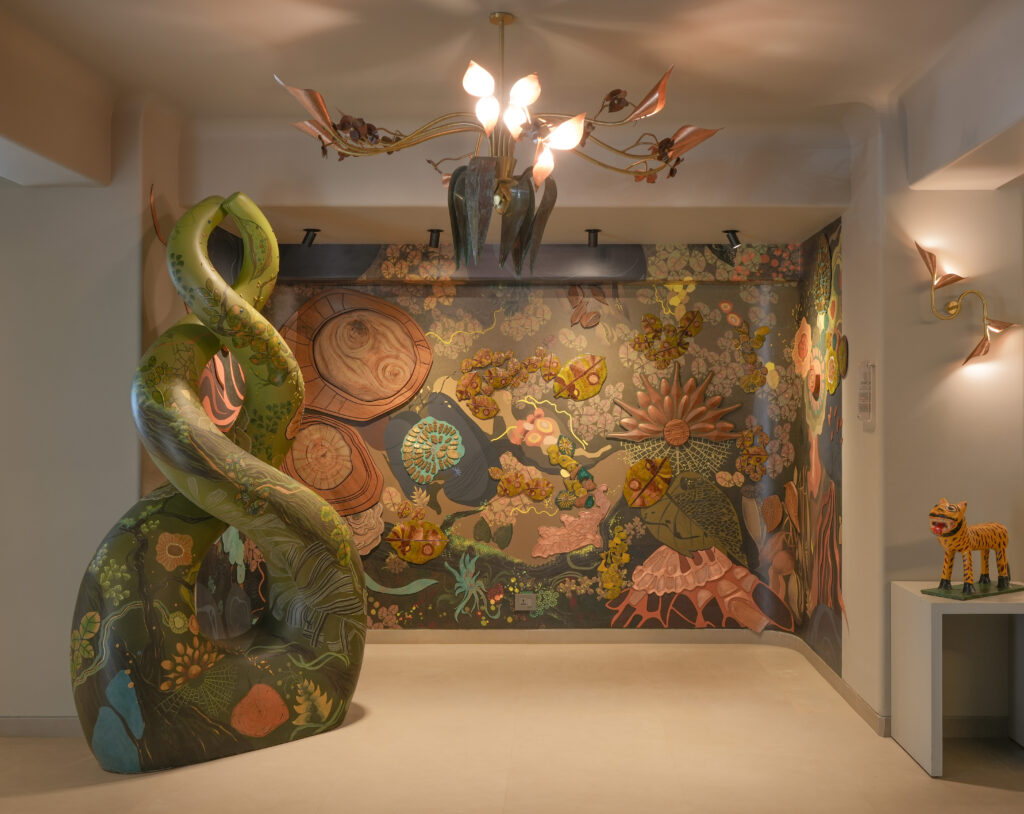
Brands that align with craft-led spatial design studio are building trust through tangibility.
Engagement Is a Spatial Outcome, Not a CTA
Good spaces don’t ask for engagement. They create the conditions for it.
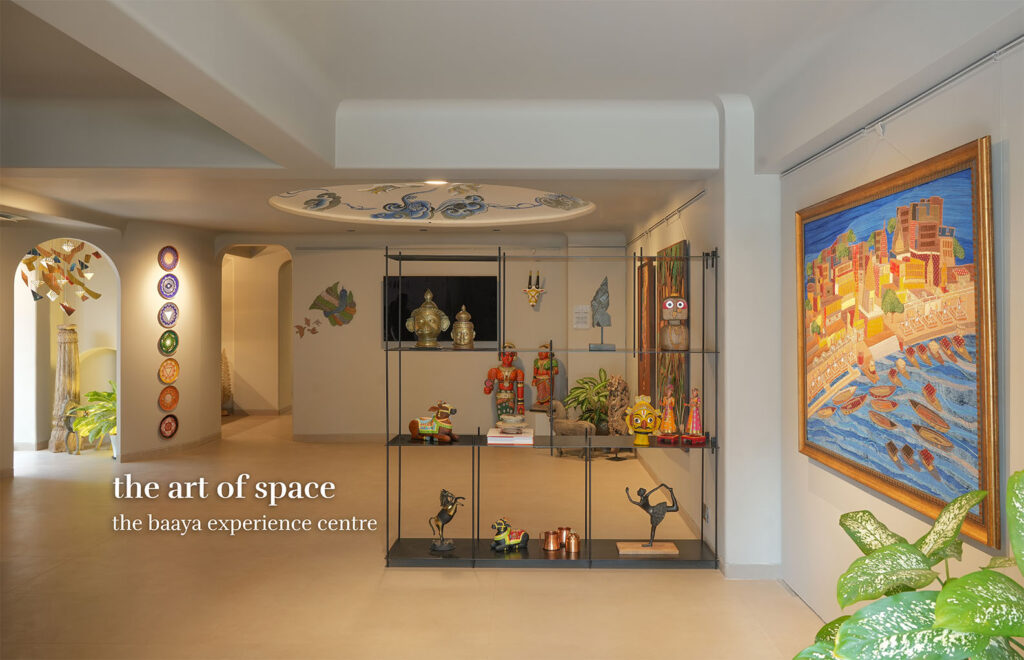
At the Baaya Design Experience Centre, visitors don’t move from product to product. They move through processes, materials, and conversations. The space doesn’t push interaction, it invites it. And that distinction matters.
Engagement here isn’t measured by clicks, but by:
- Time spent
- Questions asked
- Return visits
- Conversations that extend beyond the space
In other words, spatial design studio trades immediacy for memory. And memory is far more valuable.
The Smart Shift: Designing for Recall, Not Reach
Brands are beginning to realise that reach is finite, but recall compounds.
A well-designed space becomes:
- A reference point
- A shared experience
- A mental shortcut to brand values
Residential collaborations like Alai Osai, where mathematical rhythm, material restraint, and cultural context guide the design language, show how spatial thinking can translate abstract ideas into lived environments. These aren’t spaces that impress instantly, they reveal themselves over time.
The Real Reason Brands Are Investing in Space
Not because physical is the new digital. But because physical is the last place where brands can be fully felt.
Spatial design consultants allows brands to speak without shouting, persuade without selling, and connect without interruption.
And in an era where everyone is competing for attention, the smartest brands are doing something counter-intuitive:
They’re designing spaces worth slowing down for.
Explore Baaya Design’s projects to see how art-led spatial design can transform brand presence into lasting experience.